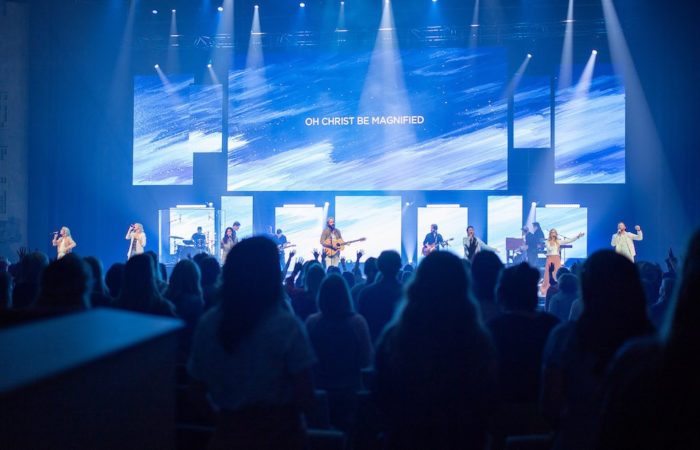
Let me ask you this. When you look out at your worship team on a Sunday morning, are you seeing a group of people genuinely playing together, or are you watching a handful of individuals performing in the same room at the same time? Because those are two very different things. And the gap between them matters.
The modern worship landscape has handed us some extraordinary tools, loops, multi-tracks, in-ear monitoring, and auto-tune. And honestly? Used well, these things can be tremendous. But there is a quiet danger nobody talks about over the green room coffee. When the tools do the heavy lifting, we can stop developing the actual musicians. Polished bronze is still bronze. The shine can fool a lot of people for a while, but it is not gold. And a congregation that is being led by something less than genuine musicianship will feel it, even if they cannot name it.
When the Music Sounds Good But Something Is Missing
There is a particular kind of Sunday that most worship leaders know. Everything went technically fine. The set list was solid. The tracks ran clean. But afterward, in the quiet of the green room or the drive home, something felt a little empty. Maybe it felt like the room was watching a performance rather than joining a movement of worship.
That hollowness usually traces back to a skill problem. Not a gear problem or a song selection problem. A people problem. Specifically, a team development problem.
This is what tends to happen. A church decides it needs better Sunday mornings. So leadership hires one dynamic person, usually someone with a great voice and strong stage presence, and loads the Sunday expectation onto that individual. The idea is that a strong leader up front will attract a crowd and raise the ceiling of the whole ministry. And for a season, it might even work. The new hire has energy. People notice and numbers tick up.
But then the cracks show. Because what was hired was a performer, not a developer. And no matter how gifted a single person is, they cannot manufacture team chemistry by themselves. Chemistry is grown. It is built in rehearsal rooms and parking lot conversations and years of playing through hard Sundays together. One person, no matter how talented, cannot manufacture that.
The Six Things That Actually Distinguish a Skilled Worship Musician
So what should we actually be looking for? What should we be cultivating in ourselves and in the people on our teams? There are six interwoven qualities that show up consistently in skilled, effective worship musicians. And not one of them is primarily about vocal range or instrument technique.
Playing Well With Others Is a Skill, Not a Personality Trait
The first one is teamwork. And before you roll your eyes because you have heard this your whole life, stay with me. Real musical teamwork is not just being nice in rehearsal. It is learning to leave sonic space for other players. It is resisting the pull to fill every quiet moment with your instrument. It is caring more about what the room is doing than what you personally sound like in your in-ears. That requires discipline, the same kind of collective discipline that makes an underdog team nearly unstoppable. This happens not because every individual is the most talented in the world, but because they are all pulling toward exactly the same thing at exactly the same time. That is what we are building toward.
The Mentor Who Is Also the Student
The second quality is multiplication. Mature worship leaders do not just lead on Sundays. They actively work to replace themselves by raising up the next person. And the beautiful thing about teaching someone younger is that you end up learning from them too. The feedback loop goes both ways. A healthy team is one where leadership is being cultivated from within the house, not perpetually imported from outside it. Inside knowledge, inside relationships, inside buy-in, these things cannot be hired. They have to be grown.
A Great Sunday Starts on a Wednesday Night
Direction is the third quality, and this one is quietly underestimated. The ability to run a tight, efficient rehearsal is a genuine skill. It is not glamorous. There is no congregation watching. But the musicians on your team know immediately whether you know what you are doing. Competent, organized rehearsal leadership is actually one of the strongest tools you have for attracting and retaining strong volunteer musicians. Good players want to play with good leaders. Give them that and they will show up every week.
Stop Copying and Start Curating
The fourth quality is self-investment, and this one requires some honest conversation. There is a real difference between mimicry and curation. Mimicry is watching what the big-name worship collectives are doing and copying the sounds, the stage layout, the spoken transitions, the lighting cues, all of it wholesale, and dropping it into your context. Curation is understanding those ideas deeply enough to know what fits your congregation’s theology, history, and demographic and what does not. That kind of discernment requires a skilled, continuously growing musician. Not a copy-and-paste operator.
Love Your Room More Than You Love Your Preferences
Service is the fifth quality. And this one will cost you something if you take it seriously. Think about the secular rock bands that figured out early on that their audience connected most with a softer sound, a different instrumentation, a different feel than what the band personally preferred. The great ones made that pivot. Not because they compromised their artistry, but because they loved their audience enough to meet them where they actually were. Worship leaders have to make this same call all the time. The question is not “what do I want to play?” The question is “what will actually carry my specific congregation into the presence of God this Sunday?” That might be the same thing. Or it might not.
The Bravest Thing You Can Do Is Ask For Help Early
The sixth quality is self-awareness. Know your strengths. Know your limits. A skilled musician understands that sometimes the most powerful thing they can play is one note held long and clean, or a quiet pad beneath the congregation’s voices. Overplaying is a self-awareness problem, not a skill problem. And there is a related piece here that is practical and immediately useful. Musicians who know their weaknesses tend to ask their questions ahead of time, before rehearsal, and especially before Sunday. They are not caught off guard because they did the honest internal work early. That is professional maturity. And it is teachable.
What You Can Do This Sunday
You do not have to overhaul your entire ministry this week. But you can do one thing. In your next rehearsal, pay attention to who is listening and who is waiting to play. The listeners are your team builders. The waiters are your soloists. Thank God for both. But if you want to build something that outlasts your own tenure on that stage, invest your energy in growing the listeners. Help the soloists become listeners too. Teach your team to hear each other, serve each other, cover for each other, and push each other to grow.
A worship team that consistently plays together, develops others, leads with competence, keeps growing, serves the room, and stays honestly self-aware is a team that will create an atmosphere that no loop pack or lighting rig can manufacture on its own.
Because ultimately, musical skill in the church is not about impressing anyone. It is about clearing the path so the congregation can encounter God without distraction. Knowing how to get yourself out of the way so He can do what only He can do is a very good gift.