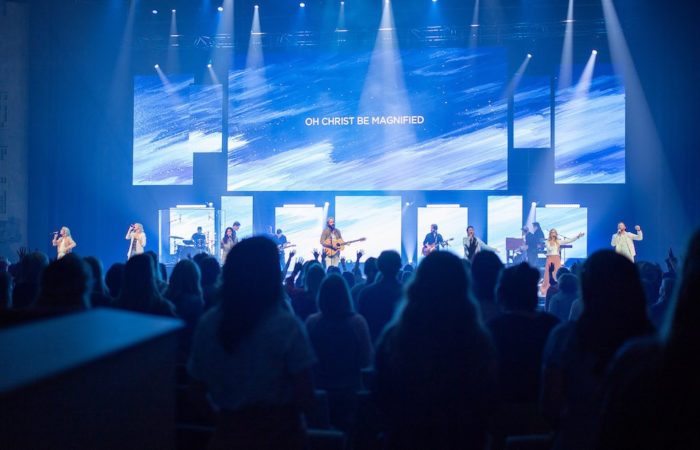
Can you run a click track flawlessly and still leave a room untouched?
I think most of us who’ve stood behind a mic on a Sunday morning already know the answer. We spent years chasing the chords, the transitions, the vocal runs. We got good. Really good. And somewhere in all that practicing, we assumed the skill would be enough to carry the room into God’s presence.
It isn’t now and it never was.
The Gap Between Sounding Good and Leading Well
Here’s the rub. A worship team can nail every note and still leave a congregation standing there, arms crossed, minds somewhere else entirely. Musical excellence and spiritual leadership are not the same skill. One you can practice in a soundproof room by yourself. The other requires you to actually see the people in front of you.
Why does this matter so much? Because worship asks something vulnerable of people. It asks them to lift their hands or close their eyes or sing a little louder than feels comfortable, in a room full of other people who might be watching. That kind of vulnerability doesn’t happen in a tense room. It happens when someone trustworthy goes first and makes it safe to follow.
What Most Teams Try (And Why It Falls Flat)
So what do most worship leaders reach for when engagement feels low? More energy. A bigger key change. An extra chorus. We turn up the volume, thinking louder equals more anointed. Or we go the opposite direction and add more talking, filling every gap with words because silence makes us nervous too.
Both of these miss the actual problem. A congregation doesn’t need more noise or more explanation. It needs a leader who has done the quieter work beforehand, the kind that doesn’t show up on a setlist.
Prepare the Room Before You Prepare the Set
A shepherd doesn’t wait until the sheep are already scattered to start caring for them. And a worship leader can’t wait until the first song to start leading. It starts the moment you pick up the mic between songs. Your posture, your pace, your willingness to sit in a breath of silence instead of rushing to fill it, all of it tells the room whether it’s safe to be honest with God here.
And once the room is at ease, don’t stop there. Ease is the starting line, not the finish. Challenge people gently to go deeper. A worship leader isn’t just executing a setlist. You’re inviting people toward something, a step of faith, a posture shift, a moment of quiet reflection instead of hiding behind the sound of the band. That’s pastoral work wearing a guitar strap.
Keep the Spotlight Where It Belongs
Think about it for a minute. Are your song choices and spoken moments pointing people to Jesus, or are they, even unintentionally, showcasing what the band can do? Worship calls a room to rapt attention, and that attention belongs to Christ alone. Not artistic flare, not technical skill, and not you.
Listen Before You Lead
Before your team ever plugs in an amp, have you asked God what He wants to highlight in this specific room, this specific week? Effective worship leaders listen on behalf of their people before they ever open their mouths on a Sunday. That means time in prayer beforehand, seeking alignment with whatever the Holy Spirit is already doing, rather than defaulting to whatever setlist worked last time.
And when the room doesn’t respond the way you hoped, when the energy feels flat or the silence stretches longer than comfortable, that’s not a signal to panic or rush the next song. That’s a signal to trust that God is still working even when you can’t see it moving. Emotional and spiritual patience might be the most underrated skill on your entire team.
Try This Sunday
This week, before you touch your instrument, spend ten quiet minutes praying specifically for your congregation by name if you can, or by section if you can’t. Ask God what He wants to do, not what you want to accomplish.
Then, in rehearsal, practice the transitions out loud, not just the chord changes. Write out or at least think through what you’ll actually say between songs, and keep it brief and Scripture-anchored. Rehearse the pauses too. A well-placed silence, held without fidgeting to fill it, can do more spiritual work than an extra verse ever will.
And over-prepare the mechanics so you don’t have to think about them come Sunday. Know your chords and cues so thoroughly that your mind is free to actually watch your people instead of watching your fretboard. That kind of readiness is what makes real spontaneity possible. You can only follow the Spirit’s leading into something unplanned if the planned parts are already second nature.
None of this requires a bigger band or a better setlist. It requires a leader willing to trade some polish for presence, some performance for pastoral care. When the mechanics fade into the background and self-promotion gets stripped away, you become what a worship leader was always meant to be, a catalyst for people to actually encounter God. And that, my friend, is a good, good gift.