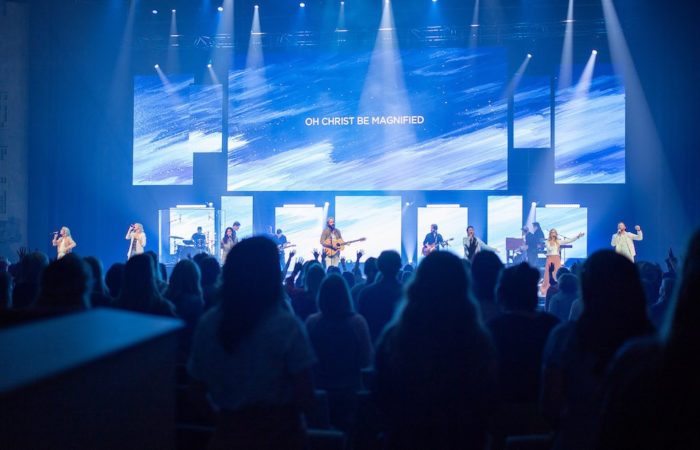
How many new songs did your church learn last month? If the honest number is six or seven, I want to respectfully ask you why.
The truth is, you are drowning in options. Thousands of new releases drop every single year, across every platform and publishing catalog, and somewhere in that flood you are supposed to pick just a handful of songs and hand them to a room full of people who did not sign up to be your beta testers. Song selection was never actually a musical decision. It’s a pastoral one.
The Real Weight Behind Picking A Song
Here’s why this matters more than most of us treat it. The songs your congregation sings become their theological vocabulary. Not the sermon series, not the small group curriculum, the songs. What your people sing on Sunday is what they’ll remember on Tuesday, in the hospital waiting room, at the graveside, in the middle of an ordinary hard week. You are not curating a playlist. You are handing people the words they will pray back to God for the rest of their lives.
What Most Worship Leaders Try
So what do most of us actually do? We chase the new release. Something drops from a big name artist, it’s trending, it sounds great through our in ears, and we get it on the setlist within two or three weeks because it feels urgent to stay current. We introduce a new song almost every week because staying fresh feels like staying relevant.
And look, the pull is real. Nobody wants to be the church still singing 2011’s hits in twenty years. But chasing every trending release treats song selection like content consumption instead of congregational formation, and that’s where it sort of falls apart.
Why Chasing The New Thing Fails
A congregation cannot form a habit of worship around a song they never actually learned. If you introduce something new nearly every week, most of your room never gets past mouthing along and reading the screen. They’re watching the stage instead of engaging with God, and that’s the exact opposite of what a worship song is for.
There’s also a theological gap that sneaks in when we chase whatever is trending. A lot of what tops the charts leans hard into how we feel and what we’re experiencing, which isn’t wrong, but it isn’t the whole gospel either. A healthy diet of songs walks through creation, the fall, redemption, grace, lament, and hope, not just one comfortable emotional note on repeat. And a song worth teaching your church should be clearly, vertically about who God is and what He has done, with the horizontal encouragement to one another woven in, not swapped in as the whole point.
Then there’s the practical wall. A song built for a featured vocalist with a two octave range and syncopation only a session musician could nail on the first try was never written for your room. If your average singer can’t find the melody by the second chorus, you haven’t given them a worship song. You’ve given them a performance to watch.
A Better Way To Choose And Introduce
Start with the filter before you ever touch the setlist. Ask if the lyrics are biblically sound and clear, not vague or doctrinally fuzzy just because they sound pretty. Ask if the melody actually sits in a range your average singer can reach, roughly an octave to a tenth, and transpose it into a key your room can sing, not the key the artist happened to record it in. Ask if this song genuinely speaks to where your specific congregation is right now, their season, their struggles, their language, not just what’s trending nationally.
Then slow way down on the rollout. Introduce no more than one or two new songs a month. Repeat a new song three or four times across six weeks so it actually has a chance to move from the screen into your people’s hearts. Anchor it to a familiar scripture or a short teaching moment so it lands with meaning instead of just novelty, and place it in the service where your congregation can actually engage with it instead of getting distracted.
And then watch. Are people singing, or are they staring at the stage? A song that never earns genuine participation after a fair shot gets archived, no hard feelings. A song that catches fire gets to stay in rotation for years.
Try This Sunday
This week, before you add anything new to the list, count how many songs your church can currently sing from memory without the words on the screen. If that number is under forty or fifty, resist the pull to add something new this Sunday and instead go deeper on something you already have. A lean, well-loved repertoire will shepherd your people further than an ever expanding one ever could.
Your job was never to keep up with the charts. It’s to shepherd hearts toward the gospel, one well-chosen, well-repeated song at a time. Because that, my friend, is a good gift.