When the news hit in late 2021 that Brentwood Benson was shutting down*, I figured that was the final nail in the evangelical church choir coffin.
Brentwood Benson for decades was the big name in choral publishing for small and mid-sized evangelical churches. They owned 60,000 copyrights and cranked out the SATB anthems, Christmas musicals and Easter cantatas. When they pulled the plug, Lifeway Worship director Brian Brown summed up the moment quite well: churches “went into COVID with choirs” and were “emerging from COVID without choirs.”
The choir didn’t die – it’s just that a certain type of choir is on life-support!
The Traditional Church Choir Was Already Dying Before COVID Hit
According to the National Congregations Study, choirs in main worship services dropped from 53.9% of churches in 1998 to 41.9% by 2018-19. That’s a slow twenty year decline that started long before anybody had heard of COVID.
Then 2020 happened. Remember that early-pandemic story out of Skagit County, Washington? A choir gathered for a 2.5 hour rehearsal in March of that year. Sixty one people showed up. Fifty two got COVID. Two died. That single event scared a lot of pastors away from restarting their choirs and many simply never did.
As I’ve written here at Worshipideas before, the church choir was already transforming long before any of this happened. COVID just sped up the inevitable.
The Two Types Of Choirs Left In Evangelical Churches Today
So what’s left of the church choir? It’s morphed into basically two models:
- The Traditional SATB Choir
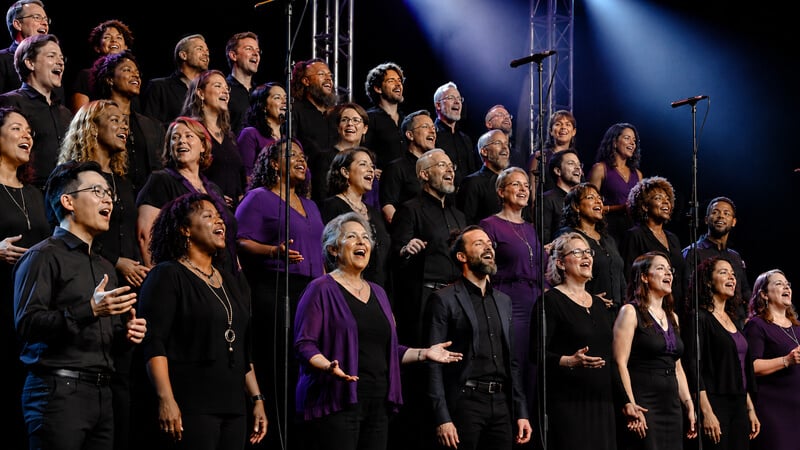
- The Worship Choir
There are outliers, of course (gospel choirs, kids choirs, the occasional Christmas-and-Easter-only choir.) But in the evangelical and Baptist world, those are the two kinds you’ll find. Let me unpack each.
Why The Traditional SATB Choir Still Has A Place
This is the choir your grandma sang in. Robes, choir loft, folders, Wednesday night rehearsal, an SATB anthem every Sunday. It’s been a staple of evangelical and Baptist worship for over a century. I can think of a church 20 minutes away from me with just this choir model, and it’s thriving. But it is an outlier.
The Traditional SATB Choir has real strengths. It can sing music your congregation couldn’t sing on its own. It develops musicianship over years of rehearsal and repertoire. It preserves a deep theological catalog (good luck finding Handel’s “Worthy Is The Lamb” from Messiah in your Hillsong setlist!) It gives older members and trained musicians a meaningful place to serve.
Where does this model still work? Older, larger, traditional churches with strong music leadership and a deep volunteer pool of people who can actually read music (which perfectly describes the church I just mentioned.) If that’s you, hang on to what you’ve got. You’re rare and getting rarer.
Where is it struggling? Everywhere else. The Wednesday night rehearsal is dying because nobody has time. The 45 minute cantata is dying because nobody wants to sit through one (remember my lunch with my buddy who exclained “I Hate Choirs!“) The weekly anthem is dying because the band-driven service has no room for it.
How A Modern Worship Choir Works In A Band-Driven Service
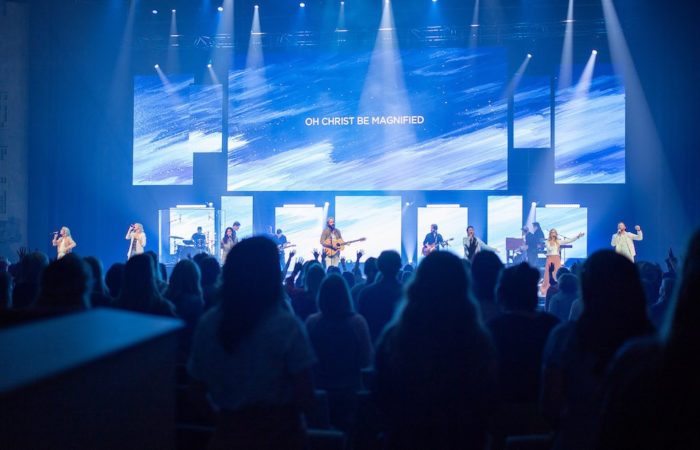
The Worship Choir is something completely different. No robes. No anthems. No weekly Wednesday rehearsal (or maybe a quick one once a month before the Sunday they sing.) A group of 10-30 volunteers stationed behind the worship team to add fullness, harmony and visible energy to a contemporary band-driven service.
The Worship Choir doesn’t perform. It amplifies. It mirrors the congregation back to itself. PraiseCharts has been producing simplified worship choir arrangements (SATB, SAB, unison) for years now, and Lifeway has followed suit. The publishers see what’s happening and they’re adjusting. I am too, at Hymncharts.com.
What A Worship Choir Looks Like At My Own Church
I asked Matt Rexford, the worship pastor at my church, to explain his choir philosophy. Here’s how he described the church’s choir timeline:
We followed the arc of a big traditional choir years ago, with weekly practices and singing ‘specials,’ then the decline over the years with modern services and spaces, less room or no room to have a big choir loft or risers.
So after some dormancy, we reinstated the smaller worship choir a few years ago. Our model has been no rehearsal, send out audio links so they practice at home, and then we gather Sunday morning and put it all together quickly.
That’s the typical Worship Choir model. Send out tracks, gather Sunday morning, get it done. But Matt is honest about the limits:
This has met with limited success, sometimes drawing 20-25 which adds a nice energy, but sometimes low Sundays of 6-8 where you wonder the effectiveness.
Welcome to volunteer ministry. Matt told me he’s considering a switch back to a monthly Wednesday rehearsal this fall:
The people we have polled seemed to be interested in this for improved community and music learning. I recently talked with Brookwood and North Hills and they are close to this model. Brookwood does a few rehearsals toward each time the choir sings.
(For readers outside the Greenville, SC area, Brookwood and North Hills are two of the largest contemporary churches in the Upstate of South Carolina. If they’re moving toward a monthly rehearsal model, that’s a signal worth paying attention to.)
Matt’s final thought is worth quoting too:
I know that their presence does add joy and mirror back congregational singing, and it also adds work. I’m trying to balance the two.”
I Saw The Worship Choir Model Coming Ten Years Ago At A Megachurch
I worked at Brookwood, which Matt mentions, well over a decade ago and they were already doing the Worship Choir model. You can see them in several of my old Hymncharts YouTube videos (here they are backing up that fantastic vocalist on my arrangement of Christ Arose.)
About 60-80 people in that choir (and it’s still thriving to this day.) A very large “small group” (and that’s exactly what it functioned as: the choir was the social center of the church for these people.) Real community and friendships. People loved being there!
But here’s what’s mind-blowing: out of all 60 people in that choir, exactly one tenor and one alto could read music!
So how did they learn the music? By rote in rehearsal, plus choir CDs sent home with each singer (back when CDs were a thing!)
And they sounded great. Not in a refined, blended, SATB-trained way. In a Worship Choir way: full, enthusiastic, energetic, on pitch (mostly!) and doing exactly what the worship pastor needed them to do: to support the band, mirror the congregation back to itself and add joy to the platform.
The Honest Weaknesses Of The Worship Choir Model
I’m not going to pretend the Worship Choir is some magic bullet.
You’re 10-30 people standing behind a worship band running through in-ear monitors at concert volume. You can barely be heard except in quiet moments (at Brookwood we actually recorded a small ensemble of the best voices to be used as live guide vocals. That way the soundman could mix these guide tracks in with the choir Sunday morning for added oomph.)
And as Matt said, some Sundays you wonder if it’s even worth the trouble. Some weeks you have 25 people back there and the energy is great. Some weeks you have 6 and you wonder why you bothered.
But any choir is better than no choir for some congregations. The visible presence of a group of regular people up there singing, smiling and worshiping does something a worship band alone simply can’t do. It tells the congregation “this is your song too.” That’s worth a lot of headaches!
Which Church Choir Model Fits Your Church Best?
Big traditional church with older members and a real choral tradition? Keep the SATB Choir. Don’t fix what isn’t broken!
Band-driven contemporary church under 300? You probably can’t sustain a real SATB choir anymore. Start a Worship Choir. Send out tracks. Try Matt’s monthly-Wednesday-rehearsal model. When I was a music director years ago at a small church plant, we could mange a seasonal Christmas/Easter choir of 15-20. That scratched the itch some people had to be in a choir, but didn’t overtax busy schedules.
Church plant or restart? Skip the traditional choir entirely. Build a Worship Choir from day one.
Stuck in the middle? Hybrid it. Worship Choir most Sundays, a choral anthem at Christmas and Easter when you can pull people together for a few extra rehearsals.
The point is, pick a model and commit. The slow, half-hearted decline of the formerly-traditional-choir-that-nobody-quite-knows-what-to-do-with is what’s hurting most evangelical music ministries right now. Pick the model that fits your actual church, not the church you wish you had, and pour into it.
Bottom Line: COVID didn’t kill the church choir, it just forced you to pick which kind you can actually pull off.
*Update on Brentwood Benson:
I should clarify something here: Brentwood Benson didn’t stay dead! After the late-2021 shutdown, Celebrating Grace acquired the Brentwood Benson choral/print catalog from Capitol Christian Music Group in January 2023 and relaunched the brand later that year. Former Brentwood Benson president Dale Mathews even came back to help lead it.
So yes, Brentwood Benson is back, but under new ownership, in a very different post-COVID choir world. The shutdown was still a huge sign of what was happening to traditional church choirs. The comeback is another sign: the choir isn’t dead, it’s adapting.