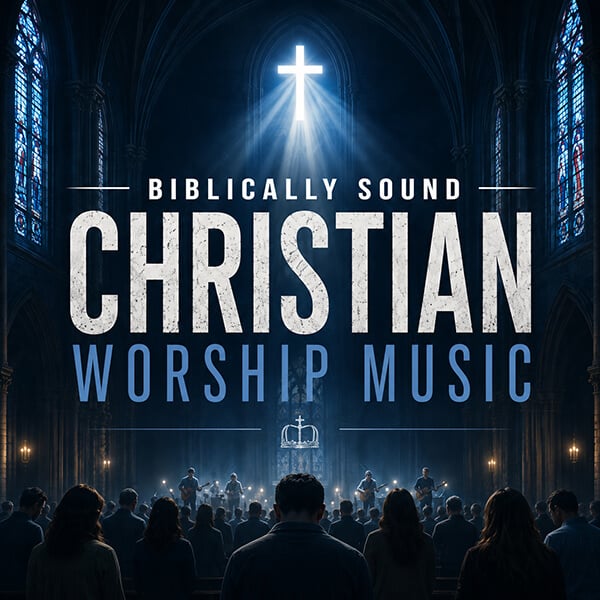
I’ll never forget one Sunday morning, sitting at the piano during the worship set, when our worship leader stopped mid-song to lecture the congregation about how poorly they were singing.
I almost crawled under the piano in embarrassment.
(And to be clear, the congregation wasn’t the problem!)
I’ve seen versions of this scene in churches everywhere. The band is roaring, lights are up, the drummer is treating every chorus like a personal achievement. The leader pulls one ear monitor out, scans the room, and drops the classic line: “Come on, church! I can’t hear you!”
Nothing changes. He tries it again, louder, with more hand gestures.
Here’s what he’s thinking: this congregation lacks passion.
Here’s what the congregation is thinking: I have never heard this song before, I have no idea what note I’m supposed to sing, this song is in an impossible key, the melody disappeared under three guitar layers, and the lyric slide changed late again!
The Purple Cow Nobody in Worship Ministry Talks About
Seth Godin’s Purple Cow principle is blunt: you can’t advertise your way to remarkable. If the product is ordinary, no amount of promotion makes people care. The remarkable has to be built into the thing itself.
Congregational worship works exactly the same way.
Yelling “Come on, church!” is the worship equivalent of buying more ad spend for a bad product. The participation has to be designed in from the start, not demanded after the fact.
The first question a smart worship leader asks is not “why won’t these people sing?” The first question is “have we made it possible for them to sing?”
Why Your Congregation Isn’t Singing (And It Probably Isn’t What You Think)
Before you reach for another “Come on, church!” moment, run through this list honestly.
The key is too high. Recording keys are built for professional singers, not normal people who’ve been up since 6am, chased three kids to the car, and already had two cups of church lobby coffee. If the congregation has to choose between worshiping God and blowing out their vocal cords, a lot of them will quietly choose silence. Lower the key. Often.
The melody is buried. Stack a few guitar riffs, three vocal harmonies, a pulsing synth pad and a drummer who is genuinely in a moment, and the person in row seven has nothing to grab onto. People sing what they can hear. Give them a melody they can actually find.
The song is too new. A new song is not yet a congregational song. It’s a teaching moment. Debut it once and expect silence. Repeat it for six Sundays and watch it take root. That’s simply how this works.
The band is too loud. When people can’t hear themselves or the person next to them, they stop singing. Not because they’re spiritually checked out, but because they feel alone in the room. A congregation that can’t hear itself will eventually become an audience. I recall visiting a mega-mega church once where the sound was so ear-shattering loud I literally could not hear the sound coming out of my own mouth!
“Come On, Church!” Is Blame in a Worship Leader Costume
I understand the intent. But what “Come on, church!” often communicates is: I’m doing my job. You are not doing yours. Worth asking: are we sure?
Congregational Singing Is Designed, Not Demanded
The remarkable thing in your service should not be a dramatic “Come on!” exhortation. It should be a room full of real people actually singing.
A singable key is an invitation. A clear melody is an invitation. A band that pulls back is an invitation. A worship leader who steps away from the microphone and lets the room breathe is an invitation. A congregation that can hear itself sing becomes an invitation for everyone around them to join in.
Your job is not to demand a response. Your job is to remove whatever friction is keeping people from responding naturally.
This Week: Audit Your Invitation
Pull one song from your set and ask yourself: Is it in a key real people can actually sing? Can someone hearing it for the third time find the melody? Is the band leaving space for the room? Have we done this song enough times that people actually know it?
Then do one practical thing. Lower the key a step. Drop the drums for a verse. Let the congregation carry a chorus unaccompanied. Ask someone afterward, “Could you actually sing that?” (Not “did you like it?” Completely different question.)
When that room starts singing on its own, and nobody had to be scolded into it…
That is the Purple Cow 🐂
Bottom Line: Don’t scold the congregation for not singing until you’ve made singing obvious, natural, and possible.