The Canadian worship leader behind “Come, Now Is the Time to Worship,” “Refiner’s Fire” and “Faithful One” died July 21 at his family home, surrounded by those he loved.
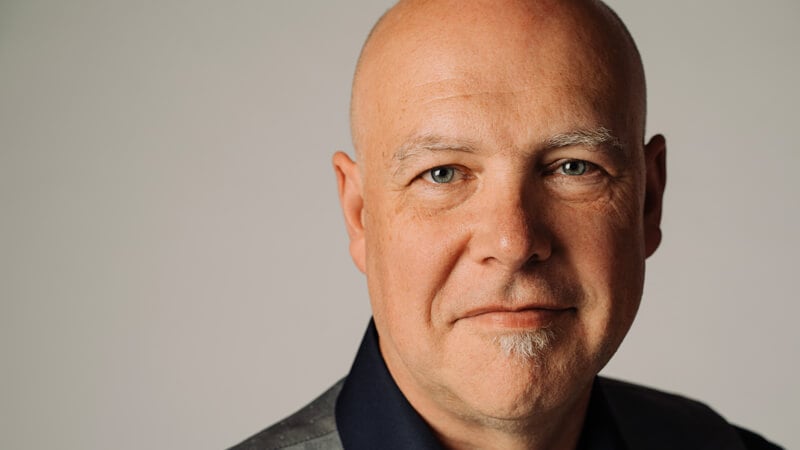
Brian Doerksen, the Canadian worship leader and songwriter whose songs have been sung by congregations around the world for more than three decades, died July 21, 2026, at his family home. His family announced that he passed away peacefully in his sleep at 6:45 a.m., surrounded by those who loved him most.
“Till the very end, Brian continued to love those around him,” the family wrote, describing how he encouraged others, thanked the doctors and nurses who cared for him, and remained “a beacon of light” to his family and friends.
Doerksen had recently been diagnosed with stage-four cancer following months of severe and unexplained pain. Doctors never publicly identified the specific type of cancer, and his family did not publish a precise medical cause of death; in his final days, his kidneys failed and his medical team recommended keeping him comfortable at home.
Best known for writing “Come, Now Is the Time to Worship,” “Refiner’s Fire,” “Faithful One” and “Hope of the Nations,” Doerksen helped shape the sound and the very language of modern congregational worship. He was also a producer, a professor, a mentor, a husband of more than forty years and a father of six. What follows is the story of his remarkable life.
Brian Doerksen’s Early Life: From a Mennonite Farm to the Vineyard Movement
Some songwriters chase the spotlight. Others spend a lifetime pointing it somewhere else. Brian Doerksen belonged to the second kind, and the church is richer for it.
Brian Robert Doerksen was born in Abbotsford, British Columbia, 1965, and grew up on a farm in a multigenerational Mennonite Brethren family. He remembered speaking to God from childhood, but he traced his sense of calling to an experience around the age of 15, when he believed God was asking him to devote his life completely to His service. As a teenager Brian experimented with Christian rock bands, yet his lasting influence would not come through the Christian pop industry. It would come through congregational music, songs written not to be performed for an audience but to be sung by the church.
Brian married his high school sweetheart, Joyce, in 1984, shortly after turning 19, and the young couple began their life together serving with Youth With A Mission in Southeast Asia. The following year, a Vineyard conference in Kansas City introduced Brian to a simpler, more intimate approach to congregational worship, and after returning to British Columbia he became the worship pastor at Langley Vineyard Christian Fellowship.
It was there, during the late 1980s and early 1990s, that Brian wrote some of his earliest enduring songs, including “Faithful One,” “Refiner’s Fire” and “I Lift My Eyes Up.” These songs were personal without being private, emotionally direct without being musically complicated, and simple enough for an ordinary congregation to learn. Brian did not write to showcase a singer; he wrote to give a room full of people language with which to pray. The 1994 Vineyard release “Light the Fire Again” carried his name to Britain and beyond, and his songs spread the old-fashioned way, through worship conferences, church networks and photocopied chord charts carried from one congregation to another.
The Story Behind “Come, Now Is the Time to Worship”
But the song the whole world would sing was still ahead of him, and it would not arrive in a season of triumph.
In the mid 1990s Brian poured himself into an ambitious musical project called “Father’s House,” a work he hoped would communicate the fatherhood of God. The project collapsed, and its failure left Brian and Joyce financially devastated, broke and temporarily without a permanent home, at one point living in a caravan in California while trying to determine what to do next. Through Vineyard leader John Wimber, Brian was invited to move to England to train and encourage worship leaders and songwriters, and it was during this unsettled, discouraging season in London that the idea for “Come, Now Is the Time to Worship” came to him on a morning walk.
The song was first introduced in a local Vineyard congregation. Visitors began taking copies of the chart home with them, and the song traveled from church to church. This was before YouTube, before social media, before streaming playlists could make a worship song instantly visible around the world, yet within months Brian began hearing that his song was being sung in places as distant as South Africa. Such was the reach of the simple invitation that it eventually became one of the defining worship songs of its era. Its message required no qualifications: worship was not reserved for the spiritually accomplished, the emotionally prepared or the socially respected. The invitation was simply to come.
The song that brought Brian Doerksen worldwide recognition emerged from one of the most humbling chapters of his life. He never forgot it, for the lesson would prove useful again.
His years in Britain bore other fruit as well. Brian mentored emerging worship leaders and songwriters, including Kathryn Scott and Brenton Brown, and he produced the 1999 Vineyard recording “Hungry,” which his official biography describes as Vineyard’s best-selling recording. He was becoming more than a songwriter. He was becoming a cultivator of other people’s gifts.
Brian Doerksen and the Integrity Music Years
Brian’s first Integrity Music recording was “You Shine,” recorded live in Dublin in 2002, and his 2004 album “Today” became his best-selling release with the label, carrying his songs beyond Vineyard churches and into the broader international worship movement. Honors followed. He received the Gospel Music Association’s International Award in 2003. His 2007 album “Holy God” earned six Covenant Awards, including Artist of the Year, Album of the Year and Song of the Year, and the following year it received the JUNO Award for Contemporary Christian/Gospel Album of the Year.
Songwriter, producer, author, teacher; Brian carried many titles in these years, and he carried them the same way he carried his songs, with patience. He published the book “Make Love, Make War” in 2009, released the live recording and film “Level Ground,” and spent approximately eight years developing “Prodigal God,” an ambitious 23-song musical based on the story Jesus told in Luke 15. Eight years on a single project is a long time in an industry built on release schedules. Brian did not seem to mind, for he had never measured his work by the industry’s clock.
Brian Doerksen’s Greatest Worship Songs
There is no Billboard chart that can adequately measure a congregational worship song. Worship songs become “hits” through CCLI reports, hymnal inclusion, international church use and sheer longevity. By those measurements, these were Brian Doerksen’s most significant songs.
“Come, Now Is the Time to Worship” was his unmistakable signature. It spread internationally through local churches before the internet could carry it, and its simple invitation made it an opening song in churches across nearly every denominational and cultural boundary. A new version with House of Worship and Leeland, released in January 2026, demonstrated that the song’s welcome had not aged.
“Refiner’s Fire” was one of Brian’s foundational Langley Vineyard songs and became one of the most enduring prayers of personal surrender to come out of the Vineyard movement, giving congregations language for holiness that was intimate, Biblical and immediately singable.
“Faithful One,” copyrighted in 1989, crossed from charismatic settings into evangelical, mainline and traditional hymnal collections, an unusual feat for a modern chorus. Its central image of God as an unchanging rock gave worshippers a simple confession of trust in seasons of instability.
“Hallelujah (Your Love Is Amazing),” co-written with Brenton Brown, showed that Brian could write not only reflective prayers of surrender but accessible songs of pure celebration.
“Hope of the Nations” became especially associated with missions, global worship gatherings and the early 2000s Integrity era, declaring Christ as the hope of every people.
Beyond these five, his catalogue included “Light the Fire Again,” “I Lift My Eyes Up,” “The River,” “Today (As for Me and My House),” “You Shine,” “Holy God,” “Your Faithfulness,” “Creation Calls,” “Everlasting Arms” and “Grateful.” Some were invitations to worship. Others were prayers for renewal, statements of trust or celebrations of creation. All of them were written to be sung by ordinary people.
Fragile X, Fatherhood and the Winter of Wordlessness
Brian and Joyce raised six children, four daughters and two sons. Their sons, Ben and Isaiah, were diagnosed with Fragile X syndrome and were expected to require lifelong care. Brian spoke openly about the shock and grief that accompanied those diagnoses, and about how raising children with significant disabilities reshaped his understanding of fatherhood, faithfulness and dependence upon God. Yes, his sons would need care for the rest of their lives, but through them Brian learned a theology of worship that no stage could have taught him. His songs were not written from a life untouched by disappointment, and they increasingly refused easy triumphalism. Trusting God, his work insisted, does not mean pretending that pain is absent.
Then came the silence. During 2011 and 2012, a painful relational breakdown within a faith community he had helped establish left Brian deeply wounded, and for a prolonged period he found himself unable to write. He called it his “winter of wordlessness.” For a songwriter whose entire ministry had been giving words to the church, the loss of words was no small trial.
His response was not to manufacture another collection of familiar praise choruses. Instead, Brian joined with The SHIYR Poets and began setting entire Psalms to music, deliberately retaining the Psalms’ difficult cries of anger, abandonment and confusion rather than editing them into more comfortable Christian language. The first two “Songs for the Journey” recordings received Covenant Awards for Inspirational Album of the Year in 2014 and 2016, and the project became one of the defining features of his later ministry. Brian helped remind the church that biblical worship includes not only celebration and victory, but grief, protest, waiting and lament.
Teaching Songwriters and Later Albums
In 2014, Brian helped establish and direct Prairie College’s Music and Worship Arts program, later continuing as an adjunct instructor, and his focus shifted steadily toward the next generation. That emphasis grew into “Unlocking Your Songs,” an online songwriting program with video teaching, group sessions and individual coaching. His goal was never to produce students who imitated his music; he wanted each writer to discover the songs that were uniquely theirs to write. After decades of international recognition, Brian spent his energy helping lesser-known writers find their voices.
The original songs returned, too. “Grateful,” released in 2018, won Inspirational Album of the Year at the 2019 Canadian Gospel Music Awards and received a JUNO nomination. He followed it with the “Faithful One” legacy collection, the JUNO-nominated Christmas album “The Heart of Christmas,” and, during the pandemic, “Everlasting Arms,” a collection of songs of peace and comfort whose proceeds supported the Lifehaven Women’s Support Society. “Hymns for Life” connected his contemporary writing to the long tradition of Christian hymnody.
One late project deserves special mention. Brian noticed that popular music contains countless songs about falling in love, and many more about love ending, but almost none about remaining faithful through decades of marriage. Drawing on more than forty years with Joyce, he wrote roughly forty songs on enduring love, commitment and the ordinary decisions that sustain a marriage, and selected twelve for the 2025 album “Love for a Lifetime.” It was characteristic of the man: he found an experience people were struggling to express, noticed the absence of a song, and wrote one.
Brian Doerksen’s Final Year and Illness
In January 2026, Brian released a newly recorded version of “Come, Now Is the Time to Worship” with House of Worship and Leeland, along with the song and video “Shelter.” There was a quiet poetry in it: the man who first received that invitation as a discouraged young songwriter on a London morning walk was now returning to it, nearly thirty years later, as a teacher, father and mentor.
The following month, severe and unexplained pain set in. His condition worsened until he was largely confined to bed, unable to work or tour. What was first thought to involve an enlarged prostate proved far more serious; after he was hospitalized in Vancouver, imaging revealed a mass in his pelvis and concerning spots involving his liver, his lungs and an area near his heart. His family announced a diagnosis of stage-four cancer, though doctors were still working to identify its primary type, and friends around the world rallied to a medical support fund in his name. In his final days his kidneys failed, and his medical team recommended that he simply be kept comfortable, at home, surrounded by those closest to him.
Even then, his family said, Brian continued encouraging the people around him and thanking the medical professionals who had tried to help him. “He was a beacon of light even in his final moments to his close family and friends, and loved well right to the end,” they wrote, concluding with a hope that others would follow his example: “May we all be like him, to love freely, be kind, and grateful even in the midst of the hardest of times.”
The Legacy of Brian Doerksen
Brian Doerksen’s legacy cannot be reduced to a single anthem, even one as enduring as “Come, Now Is the Time to Worship.” He gave the modern church songs of invitation and surrender; he gave worshippers language for God’s faithfulness, holiness and love; and in his later years he made room in the church’s song for disability, grief, lament, marriage and the unresolved cries of the Psalms. His career proved that congregational music never has to choose between accessibility and honesty, for a song can be simple enough for a room of strangers to sing together and still be strong enough to accompany them beside a hospital bed.
Many worshippers never knew Brian Doerksen’s name. But they knew the words he gave them. They sang them in small churches and large conferences, in seasons of renewal and seasons of sorrow, when faith felt strong and when it felt fragile. And they will keep singing them.
Come, just as you are, before your God. Come.