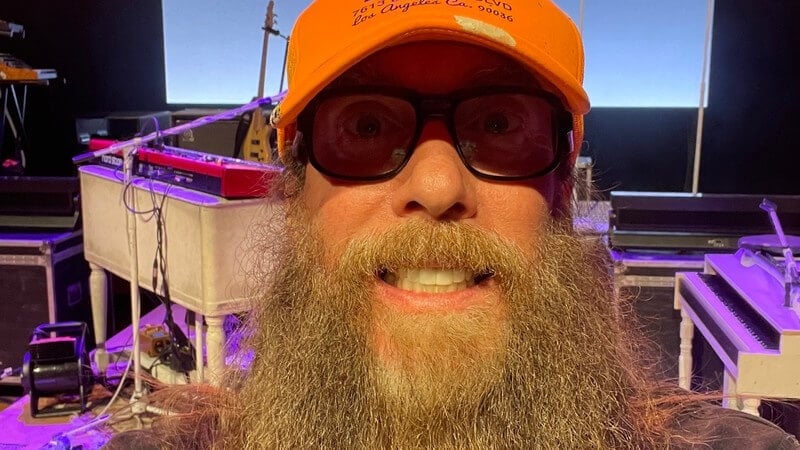
David Crowder spent the 2000s fronting the David Crowder*Band, one of the more experimental acts in modern worship music. Then the asterisked name stopped appearing on new releases, and listeners began to wonder where he had gone. Crowder did not vanish. The band ended in 2012, and he has worked steadily ever since under a shorter name: Crowder.
From Baylor to University Baptist Church
Crowder grew up in Texarkana and enrolled at Baylor University in Waco, Texas. In 1995, he helped Chris Seay launch University Baptist Church, a congregation aimed in part at Baylor students who were not connecting with existing churches.
He became the church’s music and arts pastor. The songs he wrote for that room of college students became the foundation for everything that followed.
The David Crowder*Band Era
After Crowder’s circle linked up with the Passion and sixstepsrecords world, the band released its national-label debut, “Can You Hear Us?,” in 2002. “Illuminate” came in 2003, “A Collision” in 2005, and “Remedy” in 2007.
The sound was hard to pin down. The band folded congregational worship into rock, electronic textures, folk, and bluegrass, and built some of it in a barn studio behind Crowder’s house in Waco.
“Church Music” arrived in 2009 and “Give Us Rest” in 2012. By Baylor’s count, the band released 10 albums, won seven Dove Awards, and picked up a Grammy nomination along the way.
Why David Crowder*Band Ended in 2012
“Give Us Rest” debuted at No. 1 on iTunes, so the ending was not a commercial collapse. Crowder’s own account was free of scandal. The group had been together about 12 years, had reached the end of a label-contract cycle, and felt ready for a change. Their farewell concert was in January 2021.
Several members went on to form The Digital Age. Crowder kept going alone, saying his solo work would move toward traditional instrumentation rather than the heavier electronic direction the band had been exploring.
The breakup followed a familiar arc in contemporary Christian music, where worship bands tend to dissolve and recombine, and where a frontman’s name often proves more durable than the group built around it.
David Crowder’s Solo Career
Crowder stepped away from University Baptist Church after 16 years. He and his wife, Toni, settled in Atlanta and moved into the orbit of Passion City Church and the broader Passion and sixsteps community. A Billy Graham Evangelistic Association profile noted that the band’s schedule had become depleting, which helps explain the appetite for a reset.
The solo relaunch came in 2014 with “Neon Steeple.” Crowder traded the band’s experimental streak for roots, Southern gospel, folk, and a banjo-and-beats hybrid he has leaned on ever since. “Come As You Are” became a signature song and drew Grammy attention. “American Prodigal” followed in 2016 and “I Know a Ghost” in 2018.
The radio success kept coming. “Good God Almighty” became his first No. 1 on Billboard’s Hot Christian Songs chart in 2021, by which point his label was citing more than a billion global streams. “The EXILE,” released May 31, 2024, debuted at No. 1 on Billboard’s Christian and Gospel Albums chart while he toured heavily, with stops at Winter Jam and Red Rocks and shows alongside MercyMe and Air1.
Where Is David Crowder Now?
In August 2025, Crowder broke his leg, had emergency surgery, and canceled a stretch of shows while he recovered. It read as a touring disruption rather than a retirement, and he still has 2026 concert dates on the books. He is based in Atlanta these days, though his branding and his music keep circling back to Texas.
The clearest example of that Texas history sits at 1503 Washington Avenue in Waco. Crowder and his wife, Toni, bought the Folk Victorian home built in 1885 by Wade Morrison, the drugstore owner who named Dr Pepper and helped bring it to market. The roughly 4,700-square-foot house had fallen into disrepair, and the couple spent about six years restoring it during the David Crowder*Band years.
For fans, the important detail is in the backyard. A red barn original to the property was structurally reinforced and turned into a recording studio, and the band worked there for years. “A Collision,” the 2005 album, lists “the Barn behind Crowder’s house” among its recording sites, alongside Johnny Cash’s Cash Cabin in Hendersonville and studios in Nashville and Hollywood.
The work earned local recognition. In 2009, Waco’s Historic Landmark Preservation Commission gave the Crowders an award for excellence in residential restoration. The family later left Waco for Nashville and then Atlanta, and the house eventually sold. A subsequent owner converted the recording barn into a guest house.
The barn is quiet now, but the catalog it produced is not. Crowder is still touring, still charting, and still making the kind of church music he began writing for a college congregation in Waco three decades ago.