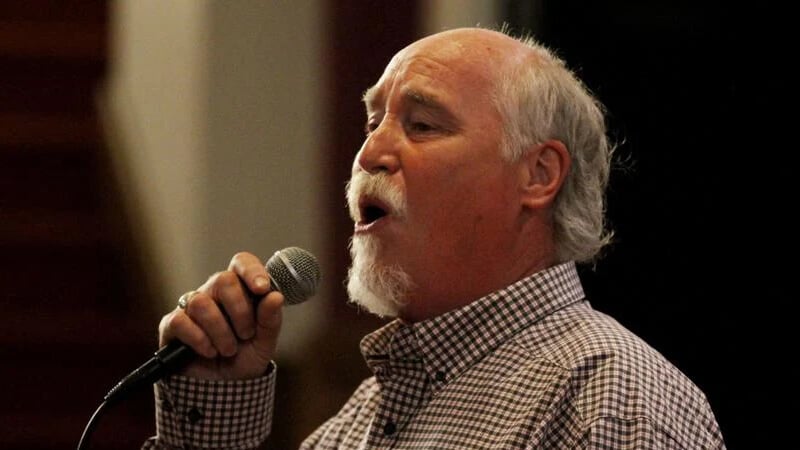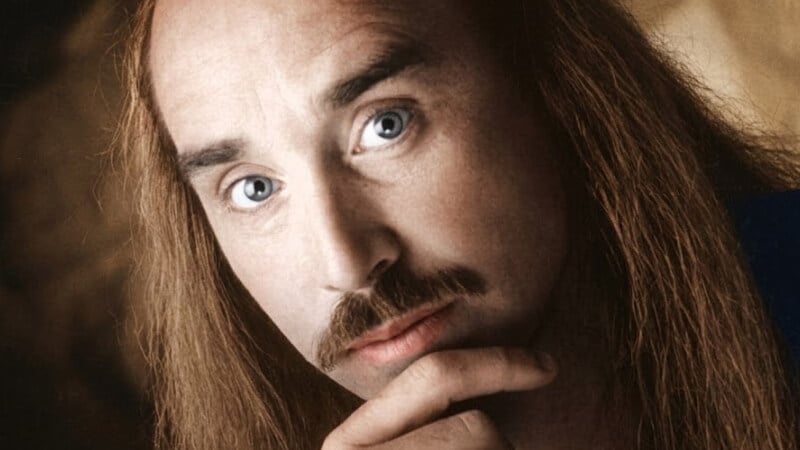
Matthew Ward has been singing for more than five decades. As the youngest voice in 2nd Chapter of Acts, the sibling trio he formed with sisters Annie Herring and Nelly Ward Greisen, he helped shape the sound of contemporary Christian music before the genre had a name. As a solo artist, he survived cancer, recorded nine albums, and put songs at the top of the Christian charts. His story begins not with ambition or a record deal but with the death of both parents before he turned 13, and with the harmonies that helped him and his sisters survive it.
The Family Tragedy Behind 2nd Chapter of Acts
In 1968, the Ward children’s mother died. Two years later, their father. Annie, the oldest of the siblings, was already married to a recording engineer named Buck Herring, so in 1970, 14-year-old Nelly and 12-year-old Matthew Ward packed up and moved to Los Angeles to live with Annie and Buck. Annie played piano, self-taught. The siblings began to sing together around it, working out harmonies Matthew would later describe as a way of releasing pain.
In Annie’s words, it was a “healing balm.”
The harmonies were unusually intricate and unusually tight. Buck, listening from the recording engineer’s chair, took notice. Within a few years, what began as a way for orphaned siblings to grieve had become 2nd Chapter of Acts, one of the foundational acts of what was just then becoming contemporary Christian music.
Many of the artists who built CCM came to it through the Jesus People movement, the Calvary Chapel scene, or a former life in rock and roll. The Wards came to it through a piano in a living room and the simple, daily project of singing together.
Matthew Ward’s Voice and the Sound of Early CCM
Matthew was the youngest of the three. His voice (high, agile, capable of an emotional ache that hasn’t been particularly imitated since) anchored the trio’s sound. On “Easter Song,” 2nd Chapter’s signature piece, it’s his vocal that carries the melody’s joy without tipping into bombast. The song would go on to be recorded by dozens of other artists and find its way into church hymnals.
The group’s early path ran through other people’s generosity. Pat Boone helped them cut two MGM singles, “Jesus Is” (1972) and “I’m So Happy” (1973), which somehow found their way onto secular California radio. Then Barry McGuire, of “Eve of Destruction” fame and now a Christian, asked them to sing background vocals on Seeds, often cited as one of the early landmarks of CCM. McGuire brought them on tour. By the time their debut full-length, With Footnotes, appeared in 1974, they had a national audience already in place.
The group’s official history mentions, almost in passing, that “Contemporary Christian music charts didn’t exist” when they started. They were making the music before there was an industry around it.
2nd Chapter of Acts Discography and Touring Legacy
A string of records followed: In the Volume of the Book, the live To the Bride with McGuire and a band called David, How the West Was One with Phil Keaggy, Mansion Builder, The Roar of Love (their Narnia-inspired concept album), Rejoice, and Singer Sower. After moving to Live Oak Records, the trio recorded two Hymns albums; the first won the 1987 Dove Award for Praise & Worship Album. In an era when many CCM acts were chasing the sound of rock radio, that turn back toward older hymnody marked something different, an instinct to honor the church’s older songs that has, in the long arc of Christian music, aged well.
They toured for 16 years, gave more than 1,000 concerts, and retired as a group in 1988. The last show was in Houston, on August 12. Matthew has said the ovation that night is one he hasn’t quite shaken.
Matthew Ward’s Solo Career After 2nd Chapter of Acts
He didn’t stop singing. He didn’t even slow down for very long.
Matthew had already recorded his first solo album, Toward Eternity, at 18; Keith Green and Michael Omartian were among the songwriters who contributed. After 2nd Chapter retired, his solo work began in earnest. Armed and Dangerous, Fade to White, Fortress, and Point of View: a run of records that let him stretch beyond the harmonic architecture of the family group.
Cancer, Comeback, and My Redeemer
Then, in 1994, he was diagnosed with three types of cancer.
The next two years were a fight to live, and when he came back into the studio it was to make My Redeemer (1997), the album his biography calls the most widely acclaimed of his solo career. It contains “I See the Lord” and “There Is a Redeemer,” two of his most-streamed songs to this day.
Two of his solo recordings, “To the King” and “I Will Worship You,” reached No. 1 on the Christian charts. That data point fits in a press kit, but it doesn’t quite catch what listeners actually hear in those recordings: a voice unhurried inside the praise, with enough grit to keep the worship from going pretty for its own sake.
Officially, Matthew Ward’s website lists nine solo albums and 15 with 2nd Chapter of Acts, plus recording credits with more than 50 other CCM artists. In 1999, the group was inducted into the Gospel Music Association’s Hall of Fame.
Where Is Matthew Ward Today?
He’s still working. He lives in Colorado with his wife Deanne. The most recent release on streaming platforms is “Walk the River,” a 2025 single with R.J. Paradee. He’s scheduled to appear in concert at the Heart of the City Music Factory in Anoka, Minnesota, in October 2026. His ministry, by his own count, is approaching 55 years.
There’s a temptation, when writing about CCM pioneers, to round the edges, to make the story tidier than it actually was. Matthew Ward’s story doesn’t really cooperate. It begins with two parents dying in quick succession. The harmonies sung by a 12-year-old were not the launch of a career; they were a way of staying afloat that turned, in time, into something else. Cancer interrupted the second act. He kept singing.
The voice has aged. Most voices do. But the instrument that anchored “Easter Song” in 1974, shaped by sibling chemistry, by tragedy, by the unrepeatable atmosphere of a particular piano in a particular living room, is still on offer in 2026. Whether or not contemporary Christian music remembers where it came from, Matthew Ward keeps singing as if it does.