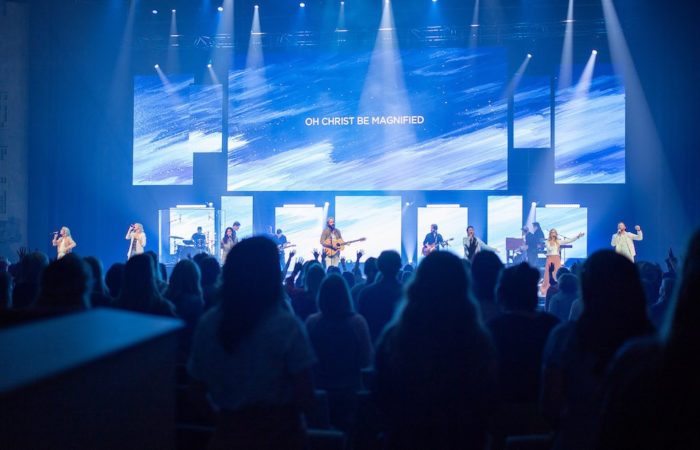
For years, the standard approach to worship presentation has been simple. Pick one background for a song and leave it in place from beginning to end. Whether it is a still image or a motion graphic, the visual experience remains unchanged while the music carries the congregation through moments of reflection, celebration, anticipation, and response.
Many worship and media leaders are beginning to rethink that approach. The idea is that visuals can do more than simply provide a backdrop. They can follow the same emotional and musical journey as the song itself. When used intentionally, multiple backgrounds can reinforce lyrical themes, support musical dynamics, and help create a more immersive worship environment.
The challenge is that visual changes are far less forgiving than musical changes. A poorly timed transition can immediately draw attention to the screen and away from worship. What is designed to enhance the moment can quickly become the thing everyone notices.
That tension explains why many churches hesitate to move beyond a single background. Consistency feels safe. It minimizes distractions and keeps the production process simple. Yet there is also a missed opportunity when every section of a song receives the exact same visual treatment, regardless of how dramatically the music evolves.
A worship song is rarely static. Verses often tell a story. Choruses broaden the focus and invite participation. Bridges build intensity and anticipation. Final choruses often carry the greatest emotional weight. If the music is taking the congregation on a journey, there is a strong case for allowing visuals to support that movement.
The key is not frequent change for the sake of variety. The goal is thoughtful progression.
Three Ways to Create Visual Progression
One effective approach is the verse and chorus flip. A quieter, more restrained background can support the verses while a brighter or more expansive visual opens up during the chorus. The transition creates a subtle sense of momentum without overwhelming the room.
Another strategy is the climax pivot. In this model, the same background remains in place for most of the song. Then, during the bridge or final chorus, a more dramatic visual appears at the song’s highest emotional point. Because the change is reserved for a single moment, it feels meaningful rather than routine.
Some churches take an even more detailed approach by creating a visual blueprint that mirrors the entire structure of the song. Intro, verse, chorus, bridge, and outro each receive their own variation. When executed carefully, the congregation experiences a visual narrative that develops alongside the music.
Keeping Everything Cohesive
The success of any of these approaches depends on cohesion. The biggest mistake media teams make is treating multiple backgrounds as separate creative ideas rather than parts of a unified story. Abruptly jumping between unrelated colors, textures, or motion styles can feel disjointed and distracting.
The safest method is to stay within the same graphic collection. Using multiple variations built around a shared visual theme makes it easier to create progression without sacrificing consistency.
Small adjustments often create the greatest impact. Colors can shift from cool tones during reflective moments to warmer tones during celebratory sections. Motion speed can increase as the energy of the song builds. Texture density can gradually expand from clean, minimal visuals to richer, more layered imagery. These subtle changes communicate movement while maintaining visual unity.
Creating More With the Assets You Already Have
Churches with limited media libraries should not assume they need dozens of graphics to achieve this effect. Most presentation software already contains powerful tools for creating variation from a single asset.
Color controls can dramatically alter the appearance of one background. Adjusting hue, saturation, or brightness can make the same motion graphic feel entirely different between sections of a song.
Blur effects offer another useful option. A heavily blurred background during a piano-driven intro can create a soft atmosphere. As additional instruments enter, the blur can gradually disappear, revealing the full image and increasing visual clarity along with musical intensity.
Sometimes the most effective visual change is no visual change at all. During a stripped-down opening with only vocals and piano, leaving the screen black can create anticipation. Introducing the background only after the full band enters makes the visual arrival feel intentional and impactful.
When Less Is More
Many churches hear ideas like these and immediately begin applying them everywhere. That is usually where problems begin.
Visual storytelling works because it is uncommon. If every song contains multiple background transitions, the technique quickly loses its effectiveness. Instead of supporting worship, the screen becomes a constant source of movement competing for attention.
Restraint preserves impact. Limiting this approach to one or two songs per set allows those moments to stand out. It also gives volunteers more confidence and reduces the likelihood of mistakes during live services.
Special events often provide an ideal environment for experimentation. Christmas services, Easter celebrations, worship nights, and other high-production gatherings naturally create space for more intentional visual storytelling. These services allow teams to refine their process before introducing the technique into regular weekly worship.
The Real Goal of Visual Storytelling
One of the best measures of success is simple. The congregation should feel the effect of the visual transition more than they notice it. Great worship visuals rarely become the focus of attention. They shape the atmosphere without demanding recognition.
This principle extends beyond the screen. Graphics should never operate independently from the rest of the room. Screen content, stage lighting, and environmental design should work together as a unified system. When colors, brightness levels, and intensity shifts align across every visual element, the entire worship experience feels intentional and cohesive.
Multiple worship backgrounds are not about making services look more impressive. They are about using visual tools with the same level of intentionality that musicians use dynamics, arrangement, and pacing. When handled with care, the result is not a more distracting worship experience. It is a more unified one, where every creative element works together to support the message of the song and the engagement of the congregation.
And when it all comes together, attention focuses on Jesus, our very good gift.