Can I be honest with you about something?
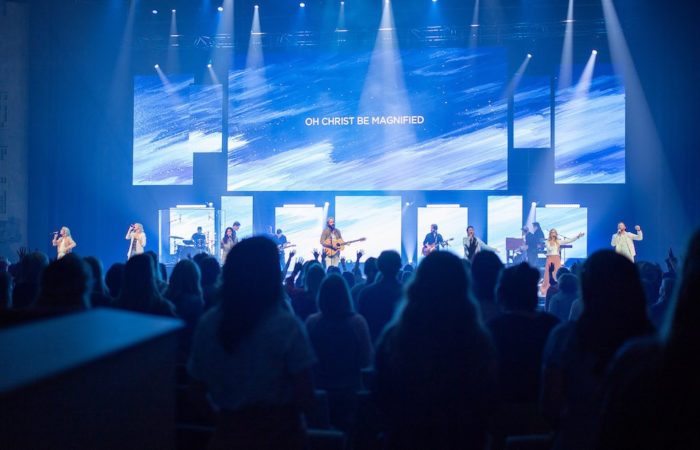
A worship team with no Spirit is just a band. And a worship team with no skill is just a distraction. Neither one serves your congregation well. And if you have been leading worship for more than five minutes, you already know this. You have felt it—that Sunday when everything clicked, when the music and the moment and the presence of God all lined up and people just worshipped. You also know the other Sunday. The one we don’t talk about. The one where the monitors were a mess, someone showed up unprepared, and you could feel the congregation mentally composing their to-do lists during the bridge.
Building a worship team that consistently creates space for genuine encounter takes more than musical talent and a good setlist. It takes intentionality. In every layer of the thing. So let’s talk about it.
Why Personal Devotion Is the Non-Negotiable Foundation
The truth that nobody wants to say out loud is this: you cannot lead people somewhere you haven’t been.
If your team members are only worshipping on Sunday mornings, under the stage lights, with the congregation watching, they are performing. Maybe beautifully, but performing. The first and most important thing you can do for your team is cultivate a culture of private worship. Encourage them—challenge them, really—to worship when nobody is watching. In the car. On a walk. In the kitchen at 6am. The private life feeds the public ministry. Every time.
And prayer. Start every single rehearsal and soundcheck with prayer. Not a token “God be with us” tossed out while people are still finding their capos. Real prayer. Intentional prayer. Prayer that says, “We know this is not a performance. We know You are here. Help us get out of the way.” When you align the team’s focus on God before you ever play a note, the whole rehearsal changes.
John 4:24
God is spirit, and those who worship him must worship in spirit and truth.
Theology matters here, too. Does your team understand why we sing? Do they know what the lyrics they are singing are actually proclaiming? A team that is biblically grounded brings a different weight to the platform. Take time—even just a few minutes at rehearsal—to unpack the theology behind a song. It deepens the whole thing.
The Difference Between Practice and Rehearsal (And Why It Changes Everything)
This one is simple, but it is a game-changer.
Practice is what you do at home. Alone. Before you show up. That is where you learn your chords, memorize your lyrics, get your part under your fingers. Rehearsal is what the team does together. And if your team is using rehearsal time to practice, you are wasting precious hours and trying everyone’s patience in the process.
Clearly set the expectation: come to rehearsal prepared. Rehearsal is for building the together—the dynamics, the transitions, the flow between songs, the moments where you breathe and let the congregation catch up. It is for figuring out who drops out on the second verse and who comes back in on the bridge. That stuff cannot happen if people are still learning the melody.
And while we are here, let’s talk about the space. Sometimes what you don’t play is as important as what you do. Teach your team that. A stripped-down moment, one instrument, some silence—these can be the holiest seconds of an entire service. Full doesn’t always mean better. Restraint is a skill that should be developed.
One more thing on musical growth. Encourage your team to keep learning. Lessons. Workshops. Online courses. A guitarist who is always sharpening his craft brings more to the table than one who decided he was good enough five years ago. Excellence honors God. It really does.
How to Cast Vision So Your Worship Team Actually Follows Your Lead
You know why you choose songs, right? You have a reason. Maybe it connects to the sermon. Maybe it is the season. Maybe God just wouldn’t let it go during your devotions this week. Share that. Every time.
When your team understands the why behind the setlist, they play it differently. They sing it differently. They are not just executing notes. They are telling a story alongside you. Vision casting is not a one-time speech you give at the start of the year. It is woven into every rehearsal, every conversation, every song selection.
And then there are the hard conversations. Because they will come.
Every worship team, at some point, has a diva situation. An attitude. A conflict that festers under the surface until it starts poisoning the well. Address it fast. Address it privately. Address it in love, but address it. Bitterness in a worship team is corrosive. It shows up on stage whether people intend it to or not.
Constructive feedback is a gift, not a threat. Build a team culture where you can say “that transition felt rushed” or “can you dial back the volume on your monitor?” without it becoming a whole thing. That kind of environment doesn’t happen by accident. You have to build it, nurture it, protect it.
And when it’s time to add new members, make the process intentional. An audition isn’t about being exclusive—it’s about ensuring musical fit and spiritual alignment. Both matter. You don’t want to add someone who can play like a session musician but has no interest in the heart of what you’re doing. Intention matters.
Building Team Culture Through Intentional Relationships and Real Community
What nobody tells you when you step into worship leadership is this: you are not just leading a team. You are shepherding people. Real people with real lives and real burdens.
Spend time together outside of Sunday. A team dinner. A retreat. A backyard barbecue. It doesn’t have to be elaborate. It just has to be intentional. When your team knows and loves each other as people, they give each other more grace on the hard Sundays. And there will always be hard Sundays.
Pair your veterans with your younger musicians. Mentorship creates legacy. That young guitarist who is raw and nervous and full of potential? She just needs someone to walk with her. And your seasoned bassist who has been doing this for twenty years? He has more to pass on than he probably realizes. Bring them together.
Celebrate wins out loud. Make it a habit. Call out what went well. Name the specific thing. “The way you held that note on the last chorus was exactly right.” “Your stage presence tonight was so engaging.” Encouragement culture doesn’t just make people feel good—it raises the standard for everyone. People rise to meet the expectation that they are capable of excellence.
And pray for each other. Not just about music. About life. About the hard stuff at home, the sick kid, the parent in the hospital. When a team prays for each other’s actual lives, they become more than a band. They become a community. And a community on a mission is an unstoppable thing.
Ecclesiastes 4:9–10
Two people are better off than one, for they can help each other succeed. If one person falls, the other can reach out and help.
Why Your Sound and Media Team Are Worship Leaders Too
Let’s put this right here. Your sound tech is part of your worship team. So is your media operator. Full stop.
They are not “the help.” They are not a necessary inconvenience. They are worship leaders who serve with a soundboard and a keyboard instead of a guitar. When you treat them that way—when you include them in the prayer before rehearsal, when you celebrate their wins, when you check in on them as people—everything changes. The mix gets better. The communication improves. The whole service benefits.
Use your tools well. Planning Center, Multitracks, chord charts, click tracks—whatever your setup is, get everyone on the same page and keep them there. There is no excuse in 2026 for a musician showing up not knowing what key a song is in or what the setlist order is. The tools exist. Use them.
Start and end on time. Every time. Punctuality is a form of respect. It says to your volunteers, “I value your time.” And when you consistently honor the schedule, people show up prepared and ready because they trust the process.
Song Selection Strategies That Actually Serve Your Congregation
Who are you choosing songs for? The congregation. Not your team. Not yourself. The congregation.
That means choosing keys that average human beings can actually sing. Your lead vocalist may be able to belt a high B-flat, but the grandma in the fourth row and the teenager in the back cannot. Keep the melody in a range that invites participation rather than passive observation.
Connect the setlist to what is happening in the room—the sermon, the season, the moment the church is in collectively. Thematic consistency creates a unified experience where music and message reinforce each other.
And be patient with new songs. Introduce them slowly. Lean on the anchors—the hymns and modern classics your congregation knows by heart. Those familiar songs are where people often sing the loudest and mean it the most. New songs are worth learning, but they need time to become loved.
Long-Term Sustainability: How to Keep Your Team Healthy for the Long Haul
Burnout is real. And worship ministry has some of the highest volunteer burnout rates in the church because it is every single week, often with little acknowledgment, and always with high expectations.
Build a rotation. Give your team members scheduled Sundays off—not just when they ask for them, but built into the calendar from the start. Let them sit in the congregation. Let them be fed. They cannot keep giving if they are never refilled.
After each service, take five minutes. Not a long debrief. Just a quick, honest, gracious conversation. What went well? What do we want to do differently next week? Keep it light and forward-looking. A short post-game conversation done consistently is worth more than an annual review.
And invest in the next generation. Develop a youth worship team—a training ground for the musicians and leaders coming up behind you. The worship ministry you are building right now is supposed to outlast you. Pour into the young ones like it matters. Because it does.
The Heart of It All
Spirit and skill. You need both. A team with all skill and no Spirit gives your congregation a concert. A team with all Spirit and no skill creates unnecessary distraction from the very encounter you are trying to facilitate. But a team that pursues both—that worships privately before they lead publicly, that practices before rehearsal, that loves each other well, that serves the sound booth like it matters, that chooses songs for the people in the seats—that team creates the conditions for something truly holy to happen on a Sunday morning.
And that, dear worship leader, is a very good gift to your congregation.
Colossians 3:16
Let the message of Christ dwell among you richly as you teach and admonish one another with all wisdom through psalms, hymns, and songs from the Spirit, singing to God with gratitude in your hearts.