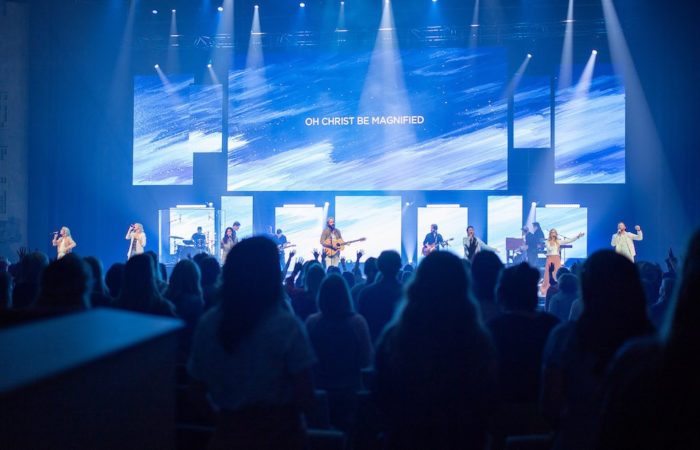
You know what most worship musicians don’t realize? The moment you step off that platform, your ministry doesn’t stop. It shifts.
We spend hours perfecting our craft. We drill transitions, rehearse vocal stacks, and obsess over tone. But what about the thirty seconds when you’re walking back to your seat during the offering? What about the moment the pastor steps up to preach and you’re still on stage, fiddling with your pedal board? What about when you’re sitting in the congregation with your phone out, scrolling through setlists while the Word is being preached?
Here’s the uncomfortable truth: your congregation is watching all of it. And what they see when you’re not playing might matter more than what they hear when you are.
The Foundation: Three Pillars That Hold Everything Up
Before we dive into the specifics, let’s establish the core principles that should guide every move you make when your instrument is silent.
Excellence. Everything you do on that stage should meet the same standard of quality as the music itself. That includes how you stand, how you walk, how you transition. If you wouldn’t tolerate a sloppy guitar riff, don’t tolerate sloppy stage presence.
Limiting Distraction. Your job is to keep eyes on God and ears on the message. Any movement, noise, or behavior that pulls focus away from the primary moment is leadership failure. Period.
Leadership. Whether you’re playing or not, you are visible. The congregation takes their cues from you. If you check out, they check out. If you lean in, they lean in. You’re not just a musician. You’re a shepherd.
When You’re Not Playing = The Moments That Matter Most
Moving On and Off the Stage
Let’s start with the basics. How you enter and exit the platform matters more than you think. Have you ever watched a band trickle off stage one by one, instruments clanking, music stands folding, that awkward shuffle where nobody knows if they should leave now or wait? It looks disorganized. Worse, it feels disorganized. And if your team looks scattered, your congregation feels scattered.
Plan your exits. Decide as a team whether instruments stay on stage or come with you. Move together when possible. And for Pete’s sake, move during designated moments. A video bumper. A prayer. The offering. Not during a tender moment of response or right as the pastor is building to a key point. Timing is everything. And thoughtful timing is leadership.
On Stage While Someone Else Is Speaking
This is where most musicians blow it without even knowing.
The speaker is up front, opening the Word, and you’re still on stage. Maybe you’re adjusting a cable. Maybe you’re noodling on your bass. Maybe you’re running scales on the keys “just to keep your fingers warm.” Stop. Just stop.
Freeze and focus. When someone is speaking, your body language becomes a sermon of its own. If you’re looking at the speaker, the congregation will look at the speaker. If you’re leaning in, nodding, visibly engaged, you’re validating the message before the speaker even finishes the sentence.
But if you’re staring at the floor, crossing your arms, looking bored? You’ve just told three hundred people that what’s being said isn’t worth their attention either.
Stand tall. Open your posture. Be present. You’re still leading, even in silence.
In the Congregation During the Message
Here’s where it gets personal. You just led worship. You poured your heart out on that platform. The congregation followed you into the throne room. And now the Word is being preached, and you’re on your phone. Or half asleep. Or whispering to the person next to you about lunch plans.
You just lost every ounce of spiritual authority you built during the worship set.
If you check out during the sermon, you’re telling the congregation that worship is the main event and the Word is just filler. You’re modeling a version of Christianity that’s all feeling and no foundation. And that’s dangerous. Be the most engaged person in the room. Take notes. Open your Bible. Respond visibly to what’s being taught. Model what it looks like to hunger for more than just the music. Because you are a member of the church first and a musician second. Act like it.
Musical Gaps: When Your Part Is Out
Soft bridge. Acoustic moment. Your instrument drops out for a full verse. What do you do? Stand there with a blank face, counting measures until you come back in? No. You worship.
Sing along. Lift your hands. Close your eyes in prayer. Make eye contact with your bandmates and smile. Show the congregation that worship isn’t just what happens when you’re playing. It’s what happens when you’re surrendered.
And here’s the bonus. When the congregation sees you worshiping without your instrument, they stop seeing you as a performer and start seeing you as a fellow traveler. That builds trust. That builds credibility.
Advanced Leadership: The Stuff That Separates Good from Great
Mastering the Transition
Transitions are the glue of the service. And they’re also the most awkward moments if you don’t plan for them. That gap between the last song and the sermon? That weird space between the welcome and the worship set? That’s where atmospheres either build or collapse.
Learn to use underscores. A gentle pad underneath a prayer. A soft instrumental moment while the pastor walks to the pulpit. A scripture reading set to music. These aren’t filler. They’re intentional scaffolding that keeps the congregation connected to the presence of God even when the “main event” isn’t happening.
And learn to lead without the music doing all the work. A hand signal behind your back to cue the band. A vocal lead-in that invites the congregation into the next moment. Non-verbal cues that guide without drawing attention to themselves. This is advanced leadership. And it’s worth the effort.
Stage Presence That Invites People In
You know what kills a worship moment faster than a technical mistake? A musician who’s lost in their own world.
Open your eyes. Look at the people. Smile. Invite them into the moment instead of shutting them out. When you play with your eyes closed for an entire set, you’re not worshiping. You’re performing in isolation. And the congregation feels it.
And when you make a mistake? Don’t react. No faces. No laughs. No exasperated sighs. Stay in character. Because if you break, the congregation breaks with you. But if you stay steady, they stay steady too.
Preparation as Worship
Memorize your music. Not because it makes you look professional, but because it frees you to actually engage with God and the people instead of staring at a chart.
Show up early. Not five minutes before downbeat, but early enough to pray, to soundcheck properly, to honor the time of your team and the authority of your worship leader.
Preparation isn’t just logistics. It’s a form of worship. It says, “This matters enough to me that I’m going to steward it well.”
The Heart Behind the Ministry
It boils down to this. Music is a vertical offering to God. But your presence is a horizontal ministry to the people.
And the best worship leaders? They’re the same person in the green room, on the stage, and in the pews. There’s no switch. No performance mode. Just a consistent, authentic hunger to encounter God and lead others into that same encounter.
Your most powerful moment of leadership might not be the solo you play or the harmony you nail. It might be the way you listen to the Word of God when the music stops. It might be the way you stand on stage while someone else is speaking. It might be the way you walk off the platform with humility and grace.
Because when you understand that your ministry extends far beyond your instrument, you start to lead like Jesus. Not just with your skill, but with your whole life.
And that right there? That’s a very good gift.