There are plenty of books that teach you how to plan a worship service. Fewer books ask a much more important question: What is worship in the first place? That’s what Healthy Worship by Kenny Lamm sets out to answer.
For decades, Kenny has served churches through worship ministry, leadership, and discipleship, helping pastors and worship leaders build biblically healthy worship cultures. That experience is evident throughout this book. Rather than offering trendy solutions or taking sides in the latest worship debates, he consistently points readers back to Scripture.
Although I’m writing this recommendation primarily for worship leaders, don’t mistake this for a book that’s only useful if you stand behind a microphone on Sunday mornings. One of the book’s greatest strengths is that it was clearly written for every follower of Christ. In fact, I’d feel just as comfortable recommending it to a worship team, a small group, or a brand-new believer as I would a seasoned worship pastor.
Healthy worship isn’t about winning the style argument, picking the right songs, or finally discovering the perfect blend of hymns and modern worship music. As Kenny writes, healthy worship is about rediscovering what worship really is, who it is for, and how God’s people are meant to gather together around Jesus.
Perhaps my favorite thing about the book is that before Kenny talks about worship styles, congregational singing, or church gatherings, he spends the first half rebuilding the reader’s understanding of worship itself. Instead of jumping straight to methods, he starts with foundations. It’s a wonderful structure, and it gives the rest of the book that much more weight.
You’ll Learn That Worship Is Bigger Than Sunday
One of the biggest takeaways from Healthy Worship is that worship is far bigger than music. Kenny begins with the biblical truth that every person worships something. If we aren’t worshipping God, we’re inevitably worshipping something else. Sometimes it’s obvious things like money or success. Other times it’s good things like family, hobbies, or ministry itself that quietly take God’s rightful place. He challenges readers to honestly evaluate what they worship by looking at where their time, money, and thoughts naturally go.
From there, the book broadens the definition of worship. Worship isn’t simply singing on Sunday morning. It’s a life lived in response to the worthiness of God. The old English word “worth-ship” beautifully captures this idea. Worth-ship = declaring who is worthy of praise.
That foundation changes everything. If worship is only music, then it begins when the first song starts and ends when the final chord rings out. But if worship is a lifestyle, every ordinary moment suddenly becomes an opportunity to glorify God.
Kenny also makes a compelling observation that has stuck with me: we become like what we worship. Worship isn’t passive. It shapes us. That’s why directing our worship toward God alone is so important.
Another emphasis is that public worship is fueled by private worship. Jesus regularly withdrew to spend time alone with the Father, and our own quiet time prepares us to live lives marked by gratitude, trust, and selfless love.
Every idea presented in the beginnings of this book reshape how we see worship which should in turn reshape how we practice worship. Powerful stuff.
You’ll Learn Why Gathering Together Matters
Once the book establishes what worship is, it shifts toward why Christians gather.
Kenny reminds readers that corporate worship has both a vertical and a horizontal dimension. We gather to glorify God, but we also gather to encourage, strengthen, and build up one another. Healthy worship isn’t just about our personal experience. It’s about the whole family of God worshipping together.
One section I especially appreciated explores four different places where God forms our worship.
- Private worship fuels our personal walk with Christ.
- Small groups cultivate vulnerability and authentic relationships.
- Congregational worship reminds us that we belong to something much bigger than ourselves.
- Festival gatherings renew the Church’s shared mission and vision.
It’s a helpful reminder that no single environment does everything. God uses each one differently to shape His people.
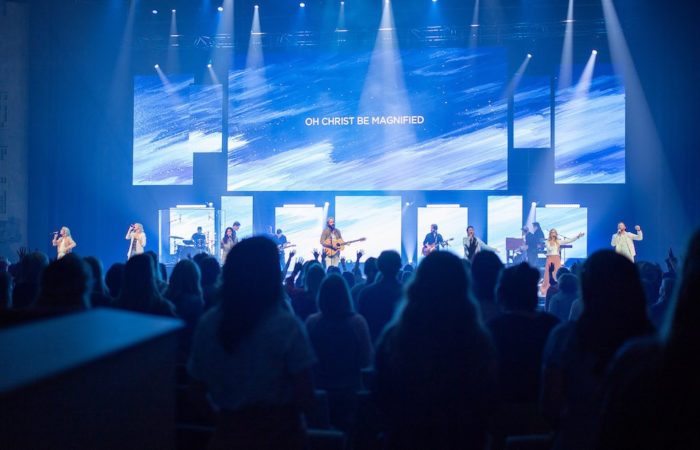
The book also pushes back against one of the greatest challenges facing many churches today: spectator Christianity. Too often we unintentionally approach worship services like live performances. The musicians perform while everyone else watches. Kenny gently but clearly reminds readers that the congregation was never meant to be an audience. Every believer is called to participate.
Whether someone expresses worship quietly or passionately, what matters most is genuine engagement with God. Healthy worship isn’t measured by how expressive someone appears but by whether their heart is responding to Christ.
You’ll Learn How Healthy Churches Think About Worship
The second half of the book becomes especially valuable for worship leaders. Rather than fueling debates over worship styles, Kenny consistently points readers back to biblical priorities. He reminds us that theology is not optional. We worship one God in three persons, and Jesus Christ must remain at the center of everything we do. Christ isn’t a mascot we tack onto our services. He is the reason worship exists. If we worship with bad theology, the worship becomes worthless to us and God.
One of the most practical distinctions in the book is between essentials and non-essentials.
- Essentials include things like biblical truth, prayer, Christ-centeredness, and congregational participation.
- Non-essentials include things like lighting, instrumentation, production, and musical style.
That’s a distinction many churches desperately need.
Perhaps the most challenging idea in this section is what Kenny calls a missionary mindset toward worship. The very worship style that may not connect with you personally could be the style God uses to reach someone else. That doesn’t mean every style is equally wise or biblical, but it does remind us that personal preference should never become the ultimate measure of healthy worship.
The same principle carries into his discussion of multi-generational worship. Rather than segregating generations, Kenny encourages churches to worship together whenever possible. Younger believers benefit from the wisdom and faithfulness of older Christians, while older believers are refreshed by the passion and zeal of younger generations. Healthy worship creates space for both heritage and fresh expression.
The book closes with an important reminder that worship doesn’t end when the service does. Healthy worship sends believers back into the world ready to love neighbors, proclaim the gospel, and live faithfully throughout the week. In other words, Sunday prepares us for Monday.
Why This Book Stands Out
One thing I especially appreciated is how practical the book is. Every chapter concludes with thoughtful reflection questions that help you process what you’ve just read. Even better, each chapter includes a section called “One Small Step,” offering a small action you can take to begin living out that chapter’s teaching. It’s a great feature that shifts the book into a mini manual on how to get going on this stuff. Never overwhelming.
Many Christian books are excellent at filling our minds. This one consistently pushes readers toward application. If you simply read straight through, you could finish the book in about two hours. But if you slow down, answer the reflection questions, and genuinely work through the action steps, you’ll get far more value from it than its page count suggests.
Should You Read It?
If you’re looking for a technical guide on rehearsal techniques, sound systems, transitions, or building the perfect worship set, this isn’t that book. If you’re looking for a biblical foundation that will reshape how you think about worship, both personally and corporately, I think you’ll find Healthy Worship to be well worth your time.
Worship leaders spend countless hours thinking about what happens during a church service, but Kenny Lamm reminds us that healthy worship begins long before the first song and continues long after the final prayer. That’s a message every worship leader needs to be reminded of.
And perhaps more importantly, it’s a message every worshipper needs to hear as well.