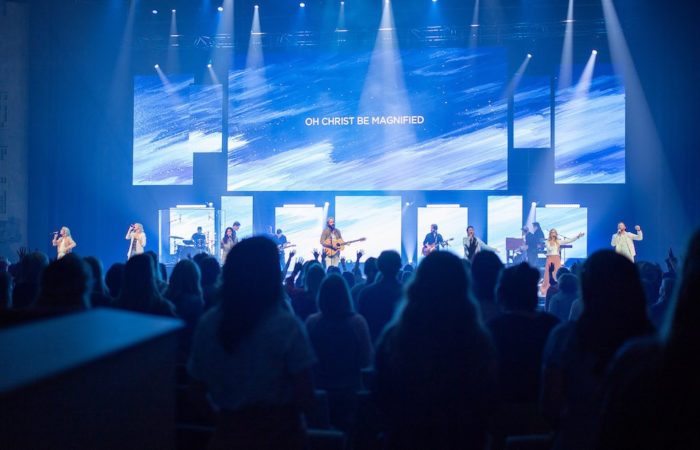
There is someone walking into your church this Sunday who is barely holding it together. You won’t know who it is when they arrive. They’ll find a spot toward the back, and while everyone else is lifting their hands, they’ll fold their arms and stare at the floor. And sitting just a few rows in front of them will be someone who came in early, already worshiping in the parking lot, ready to run a lap around the sanctuary if you give them half a chance. That is your room. Both of those people, every single Sunday.
The Congregation You Are Actually Facing on Sunday Morning
This is the central challenge of leading corporate worship. You are standing in front of a room full of people in wildly different emotional and spiritual states. Some are new believers who aren’t sure what to do with their hands. Some were dragged here by a spouse and are already counting ceiling tiles. Some are sitting inside fresh, genuine grief. Some are natural introverts for whom the whole “raise your hands and shout” instruction lands as a small personal crisis. And some, bless them, came in ready to dance. Now what do you play?
Why Corporate Worship Was Never Designed to Be One Note
This is not simply a preference problem or a temperament mismatch between the lively people and the contemplative people. Scripture does not give us the option of picking one worship mode and planting our flag there forever. The same Bible that commands us to shout for joy, clap our hands, and sing a new song to the Lord also commands us to be still, to tremble, to wait in silence before a holy and weighty God. Both commands are present. Neither cancels the other out.
This is not a contradiction, but a complete picture.
Celebration matters because it is a declaration. When a congregation sings with genuine exuberance, they are making a visible, physical statement about the goodness and victory of Jesus. They are breaking apathy with their bodies and their voices. But seriousness matters because God is genuinely holy and His presence deserves more than we can manufacture with the right tempo and good stage lighting. Lament matters because the person in the back row with folded arms needs to know that this church has room for hard questions and for grief and for the season where nothing feels fine. If we don’t make space for the weight, we lose them. And we lose them to the idea that Jesus is only available to people who are doing well.
What Happens When Worship Teams Pick a Lane and Stay There
Most worship teams solve the tension by picking a lane. Either the service tilts consistently high-energy, with big anthems and a very clear message that we are a joyful people who serve a victorious God. Or the service leans contemplative, with minor keys and breathing room and a quieter, steadier vibe. And both of those can be done beautifully.
But they are only half of what Scripture actually asks for.
The other solution many teams reach for is production. Better lighting, tighter transitions, more rehearsal, a more polished Sunday experience and none of these are wrong. A well-prepared service is an act of honor. But here is what production cannot do. It cannot replace the raw, vulnerable, corporate act of a room full of imperfect people genuinely baring their souls before God. When a service leans too hard on performance, something quiet happens to the congregation. They slide from participant to audience. They start observing and comparing and critiquing. Worship becomes something consumed rather than something expressed. And once that shift takes hold, it is genuinely hard to reverse.
Why Formula and Feeling Both Fall Short of the Real Thing
When we let our own temperament set the entire liturgical tone every week, we are centering ourselves in a room that is not supposed to be about us. The contemplative leader who never schedules a high-energy praise song is, in a quiet way, asking the congregation to accommodate their preferences rather than stepping into sacrificial obedience to what the room actually needs.
The same is true in reverse.
The leader who lives for the anthems and the big moments and never creates space for lament is, without meaning to, sending a message to the grieving that their season doesn’t belong here. And when we rely on music to engineer emotion rather than on lyrics to anchor truth, we are building on sand. Loud guitars and ambient pads can move people. They do it all the time. But movement is not the same thing as transformation. Transformation happens when a congregation digs into who God actually is. When they sit inside the words and find them true. When the theology holds under the weight of a really terrible week. Feeling is not the enemy. Feeling untethered from truth is. And over time, our setlists quietly reveal which one we are actually serving.
Leading the Whole Room Well This Sunday
Start with one honest question before you plan your next service. Who is actually going to be in that room? Not who you hope will be there. Not the congregation you had a few years ago or the one you are praying toward. The one that is coming this Sunday, in all of their beautiful, complicated, grieving, joyful specificity.
Then build for all of them.
Let the set breathe. Give the room permission to move and permission to be still. Create space between songs for a passage of Scripture, a moment of prayer, a full pause. Don’t be afraid of quiet and, at the same time, don’t be afraid of loud. Pick at least one song per service that runs counter to your own natural default and lead it with your whole heart.
This is not a liturgical trick. This is, instead, an act of pastoral love.
Over time, build a body of songs and a service culture that can hold both a terminal diagnosis and the best week someone has ever had. Because both of those people are coming. And both of them deserve to find Jesus in the room when they get there. A healthy church does not ask every person to express worship in exactly the same way. It asks everyone to pursue Jesus with equal sincerity and equal abandonment. Unity is not uniformity. And corporate worship is not designed to satisfy our emotional comfort zones. It is designed to turn a room full of individuals outward toward a God who is both joyful and holy, both intimate and beyond all imagining, both the God of the dance and the God of the valley. You don’t have to manufacture that. You just have to make room for it. And that space is a very good gift to the people you are leading.
Psalm 95:6
Come, let us bow down in worship, let us kneel before the Lord our Maker; for he is our God and we are the people of his pasture, the flock under his care.