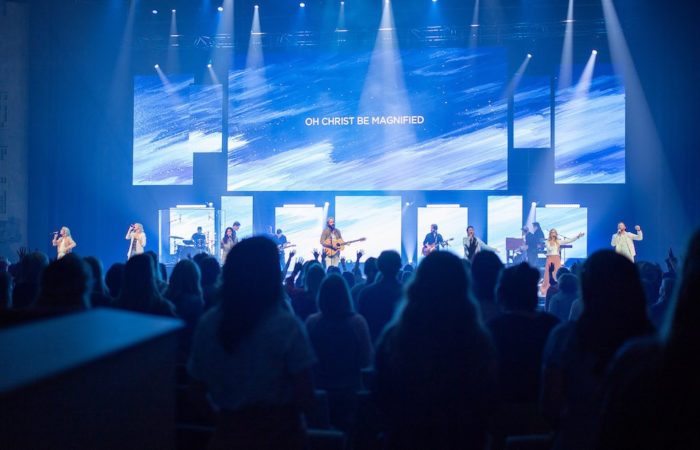
Have you ever stood on a stage after a set, sound tight, harmonies locked, lights doing exactly what you programmed them to do, and looked out at a room full of people and they are just silently watching you?
That happened to a pastor recently. Good preaching. Good theology. Excellent musicianship. And yet he stood in the congregation and realized he couldn’t actually sing along. Not because he didn’t want to. He simply couldn’t find the melody, couldn’t predict where the song was headed, couldn’t locate his own voice in the mix. He wasn’t lazy, he was locked out.
If that story makes you squirm a little, it should. Because most of us leading worship right now have unintentionally built rooms that are excellent at performing and mediocre at inviting.
The Skill Trap Every Worship Leader Falls Into
What you might not know when building a worship team is that skill is not the enemy. But skill aimed at the wrong target absolutely can be.
Colossians 3:16 tells us to let the message of Christ dwell among us richly as we teach and encourage one another through psalms, hymns and songs from the Spirit, singing to God with gratitude in our hearts. Read that again. One another. This was never meant to be a solo. It was always meant to be a shared voice, believers actually singing to and over each other.
So when the room goes quiet except for the stage, something has gone sideways. Not because anyone meant harm, but because excellence quietly got redefined somewhere along the way.
Where The Room Goes Silent
A few culprits show up again and again, and they’re sneaky because each one, on its own, looks like a win.
New songs every few weeks keep things fresh. Except a congregation can’t sing what it hasn’t had time to learn. A visitor walks in cold and never gets a chance to catch up.
Songs built for a studio recording, with wide vocal ranges and unpredictable rhythm shifts, sound incredible on the record. Ask an average singer in row twelve to follow that same melody and watch the confusion set in. Most people simply don’t have the range or the timing training. They stop trying before the first chorus ends.
Then there’s the vocal flourish. That unscripted run or that surprise octave jump out of nowhere. It might feel spontaneous and Spirit-led in the moment, but for the congregation it reads as unpredictability, and unpredictability breeds silence. People stop singing when they’re not sure what’s coming next.
What Most Worship Teams Try (And Why It Doesn’t Fix It)
Most teams respond to a quiet room by pushing harder. Bigger sound. Tighter lights. More rehearsal, more polish, more professional gloss on the arrangement. It makes sense. If the room feels flat, surely the answer is better production.
But turning up the volume on the stage just turns down the volume of the room. When the mix is so hot that people can’t hear the person singing next to them, the sense of corporate voice collapses. And when the house lights dim while the stage glows, we are quietly telling the congregation exactly where the action is happening, and it isn’t in the pews.
More polish, chased without a change in direction, just builds a nicer audience experience. It does not build a singing church. Those are two different goals, and only one of them is actually biblical.
Try This Sunday
You don’t need to gut your set list or unplug your in-ears this weekend. Start smaller.
Pick one familiar, easily singable song and let it stay in rotation longer than feels exciting to you. Repetition isn’t laziness. It’s how a room learns to own a song instead of just watching it happen.
Pull your FOH volume down just enough that your team can hear the congregation singing back at them. If you can’t hear the room, neither can they.
Bring the house lights up, even slightly. Let people see each other’s faces while they sing. Worship was never meant to happen in the dark, alone together.
And ask your vocalists to save the flourish for one moment in the set instead of scattering it through every chorus. Give the melody room to be sung, not just admired.
None of this diminishes your team’s gift. It redirects it. Real excellence in this context isn’t measured by how good you sound to the room. It’s measured by how fully the room gets to join you.
Because in the end, our job was never to be watched. It was to hand the congregation their own voice back, week after week, so they could sing the truth over one another the way Scripture always intended. And that right there is a good, good gift.